
In our March Seagrape Circle meeting, we had the pleasure of having Joe Winkler of BamBam Bonsai in Ft. Pierce educate and entertain us with the incredible art of Bonsai. It was a great demonstration packed with great lessons we can all apply, most of which would be considered best practices for all of our gardening.
Lesson #1: Bonsai is an art, not a plant.
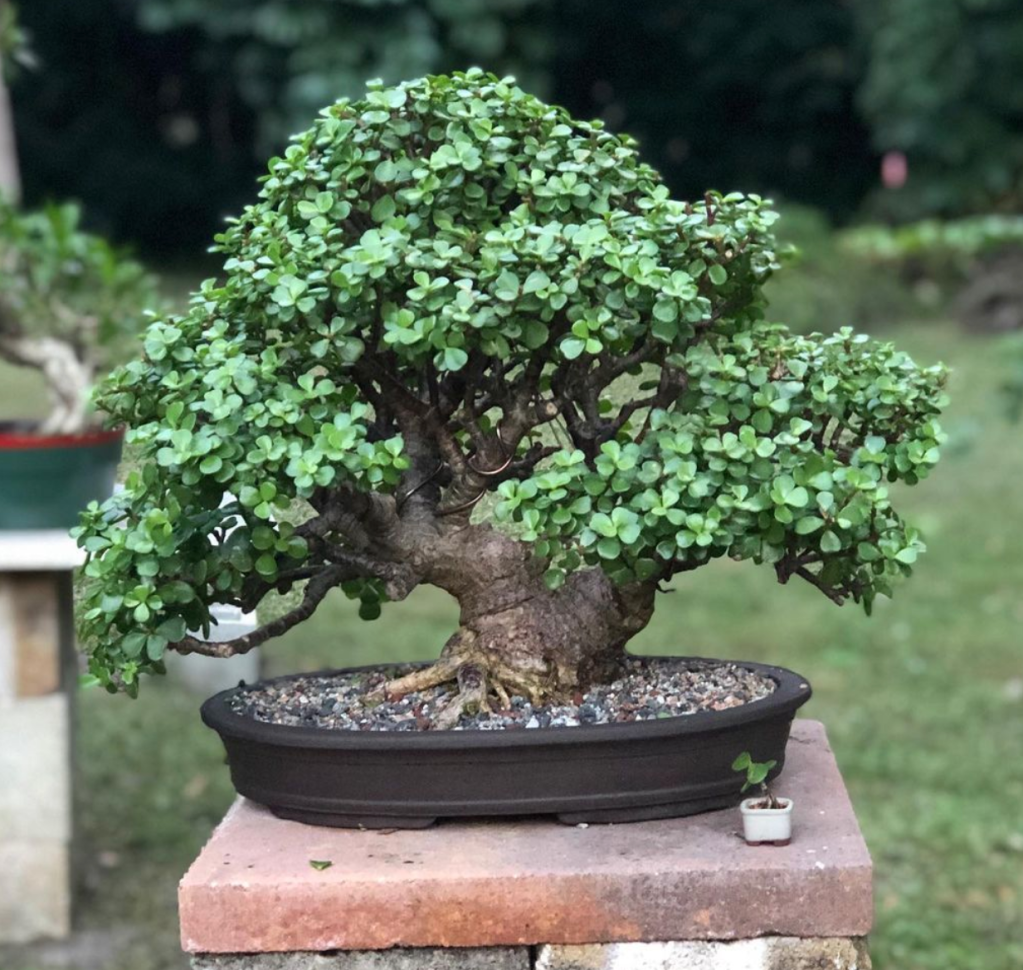
As soon as I walked up to look at Joe’s bonsai trees, I recognized the plants as familiar plants I had in my own garden. I was baffled. I have to admit, (don’t laugh!) I thought a bonsai tree was a type of plant. I had no idea they were, as described by Webster, “the art of growing dwarfed, ornamentally shaped trees or shrubs in small shallow pots or trays.” Bonsai is how you grow the tree. It’s an art! And I LOVE art!!
PICTURED LEFT: A portulacaria afra Joe posted on his Bambam Bonsai instagram.
Lesson #2: To Bonsai, you have to be brave.
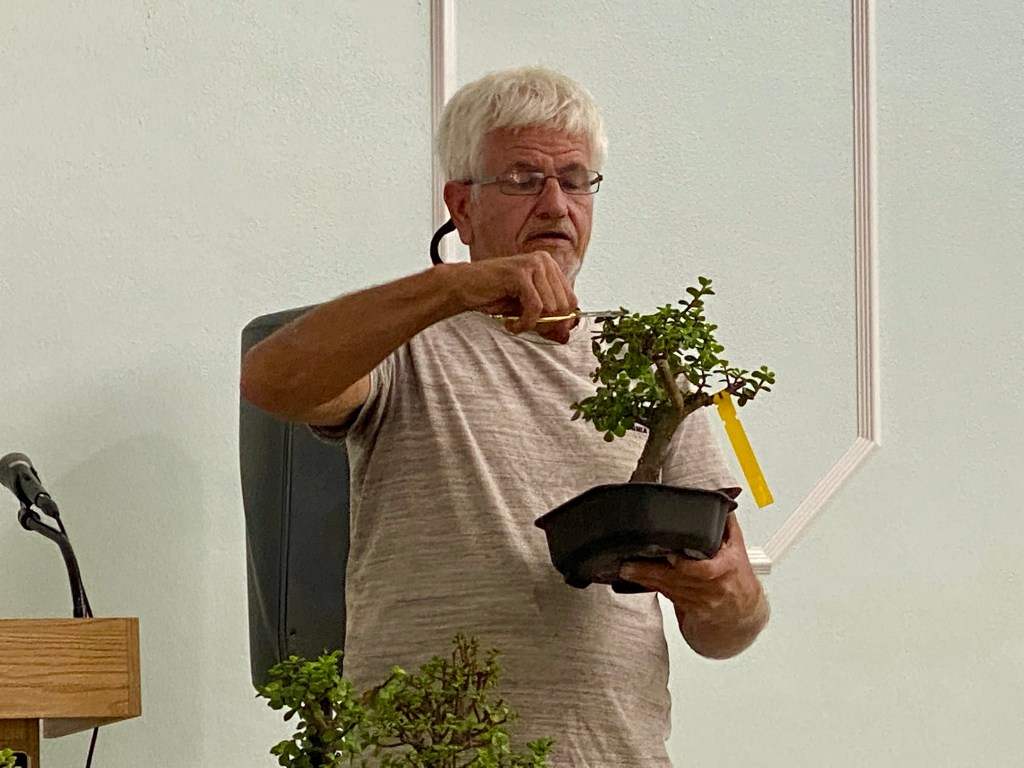
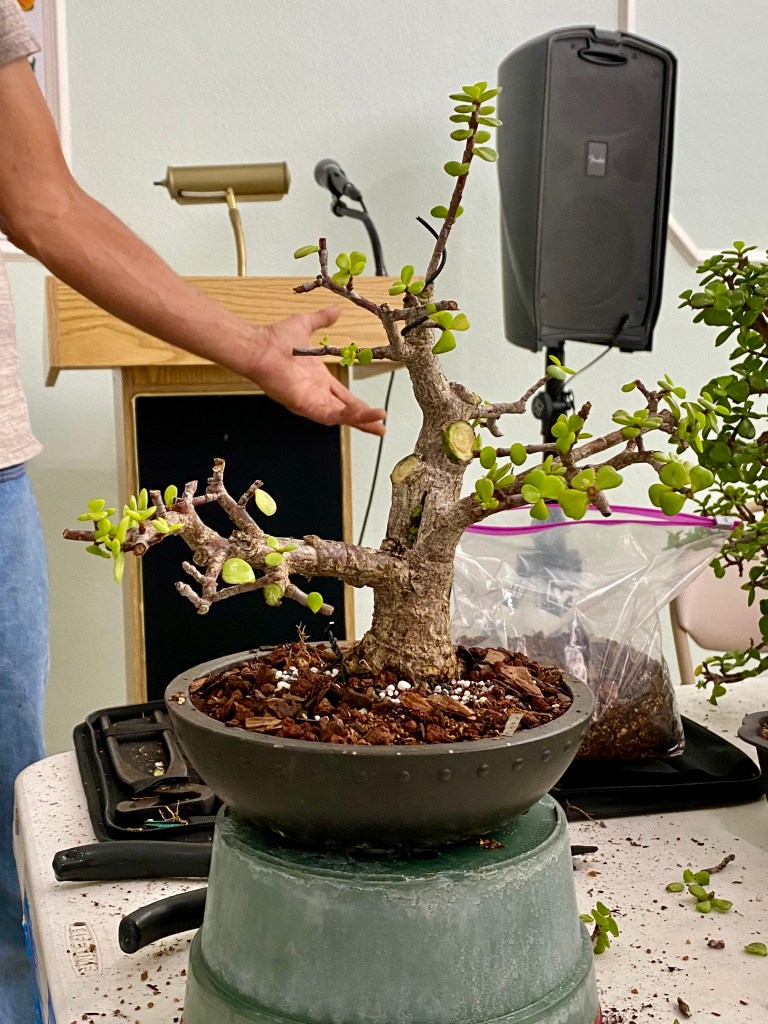
As Joe began to manhandle the Jade plant, chopping it up one limb at a time, we all cringed as if we were all feeling each painful snip. I think I heard Marion at one point say “ouch” and I believe that was the overall consensus across the room. However, it was very entertaining to watch him prune away with such bold confidence. In a few snips, tugs and bends, we watched his Bonsai creations unfold before our eyes and we “ooed” and “aahed” the whole way through it.
Lesson #3: Add wire to our garden tool kit.
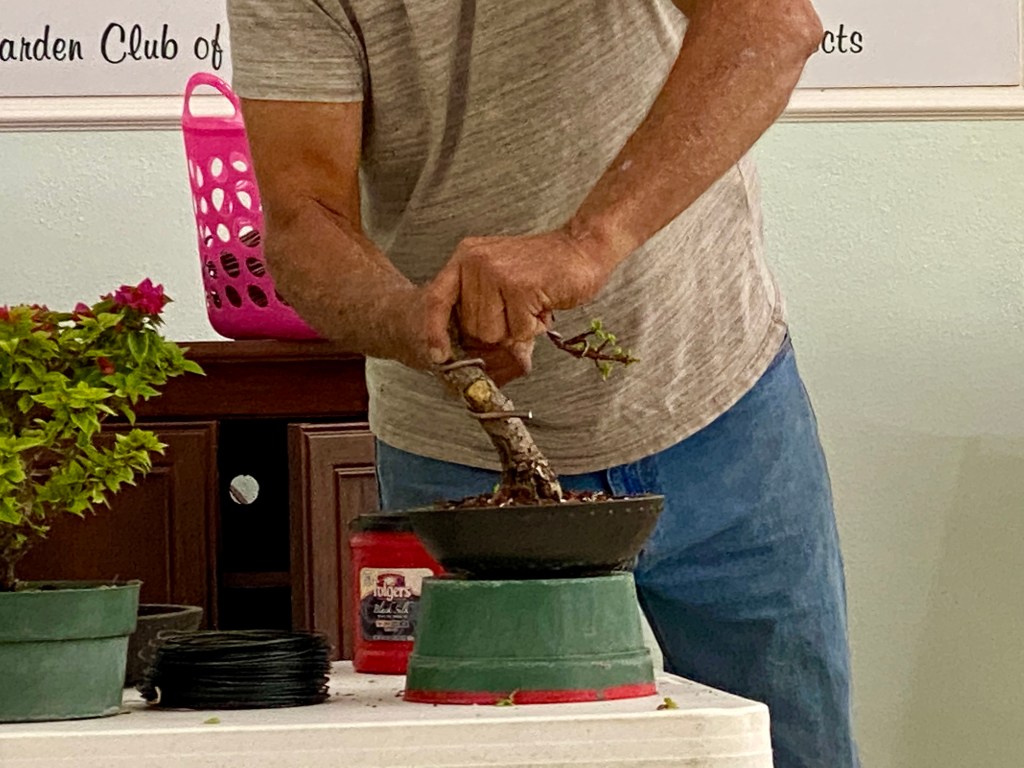
I learned wiring is one of the crucial techniques used to shape bonsai trees into their desired form. We watched Joe demonstrate extreme wiring while he shaped this Jade plant into a work of art, called Literati. The Literati style is described online by Bonsai Today as “a thin slender trunk with only a few branches”. They continued describing the style saying, “the lower branches are often dead and barren, but the trunk itself is full of great character.”
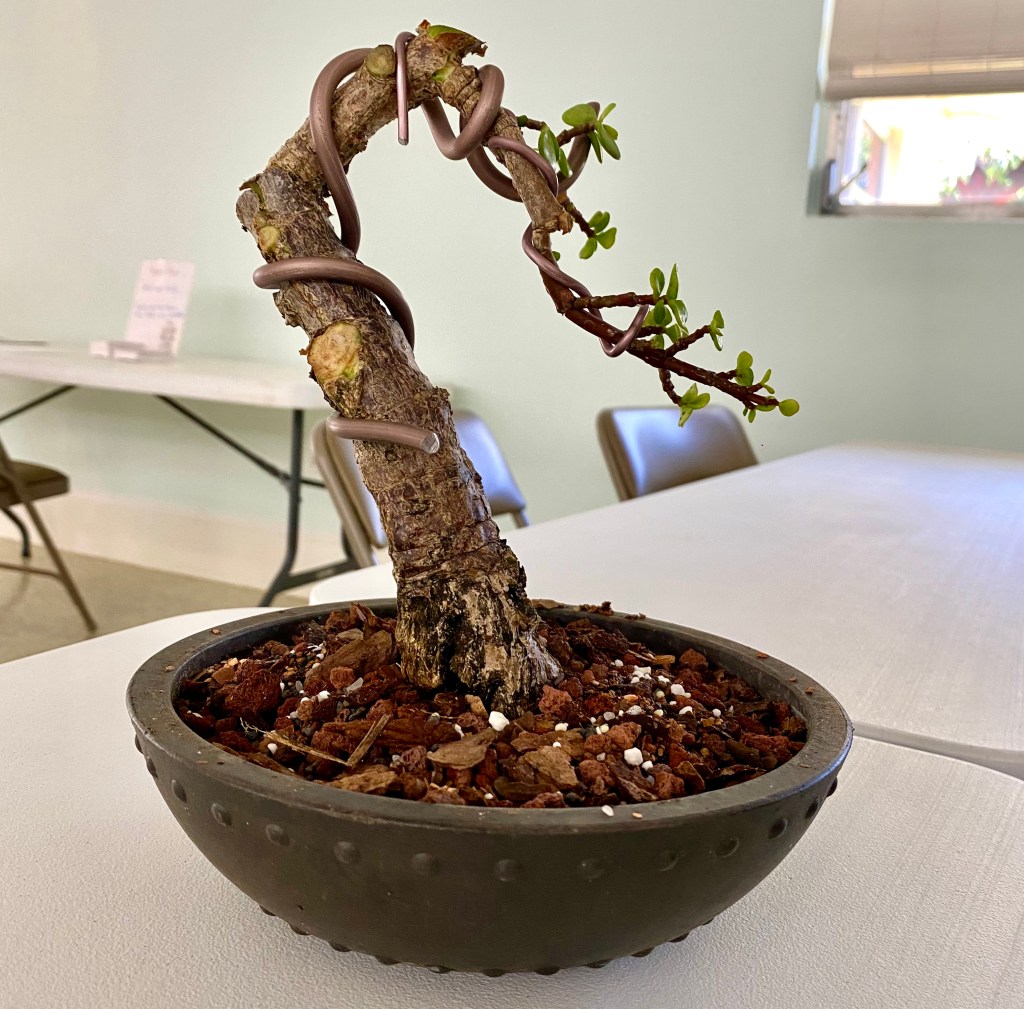
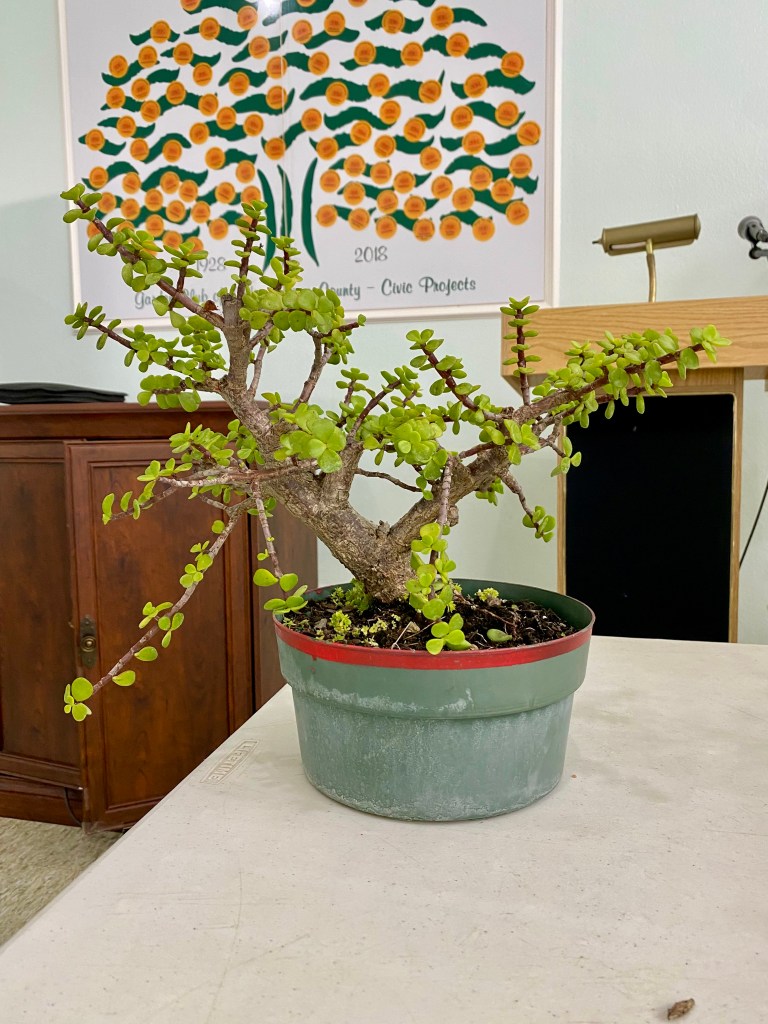
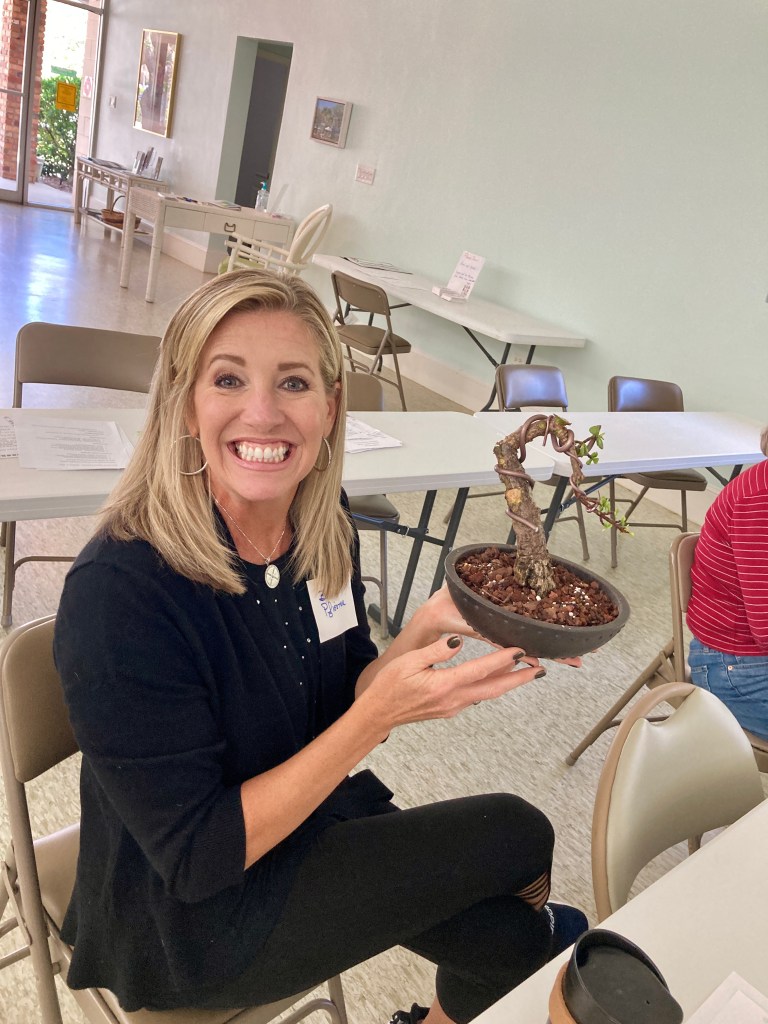
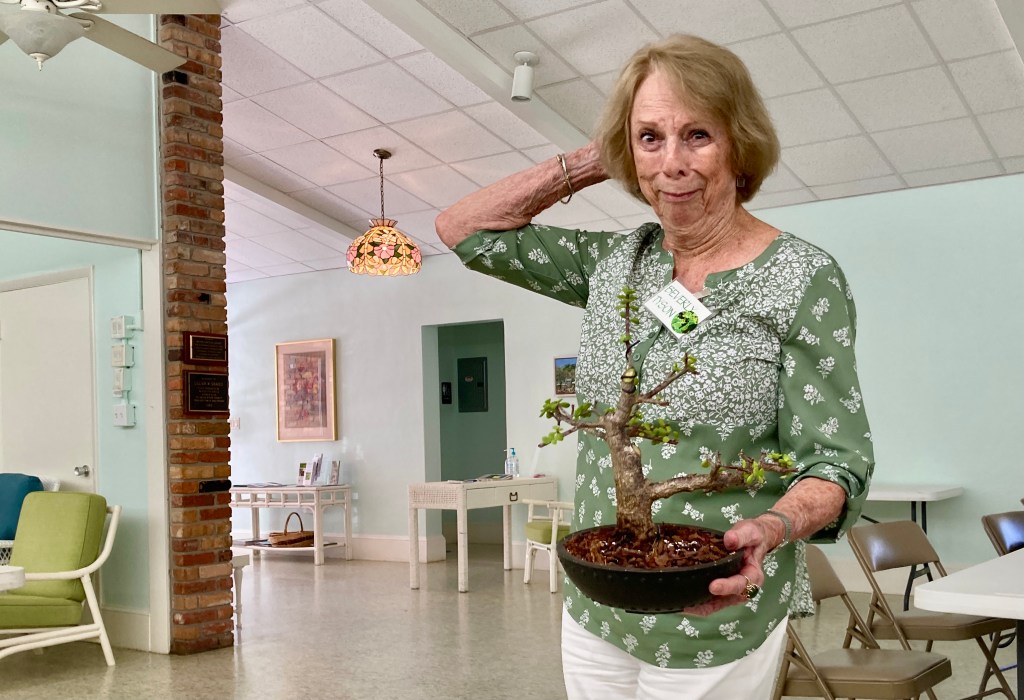
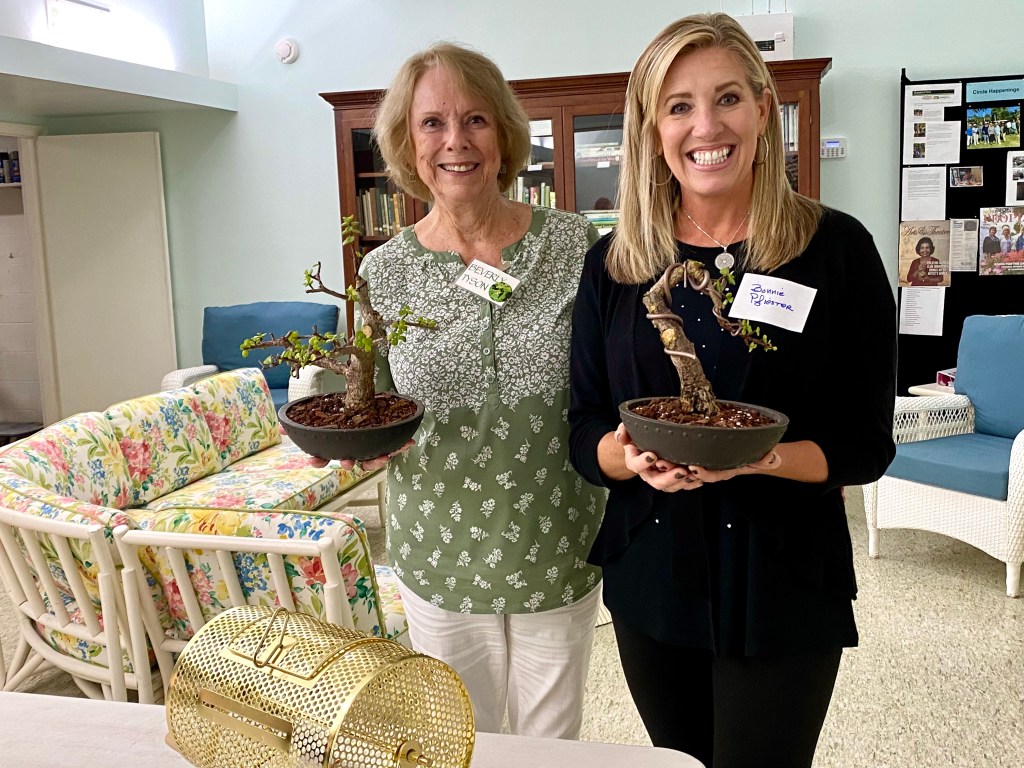
The name ‘Literati’ comes from the paintings of old Chinese artists, who would reproduce a tree in an almost abstract way. The Literati bonsai sure makes a statement, as you can see in this photograph. This photo is the finished work of his creation, which I later lucked out and won in the raffle! Yahoo!! I can’t WAIT to watch and care for this plant!
TIP: Notice the wire it not wrapped tightly, touching itself, which would strangle the plant. I bought a multipack of aluminum wire to play with from Amazon for $13.99 so I could play with my Jades at home.
Lesson #4: Prune the roots.
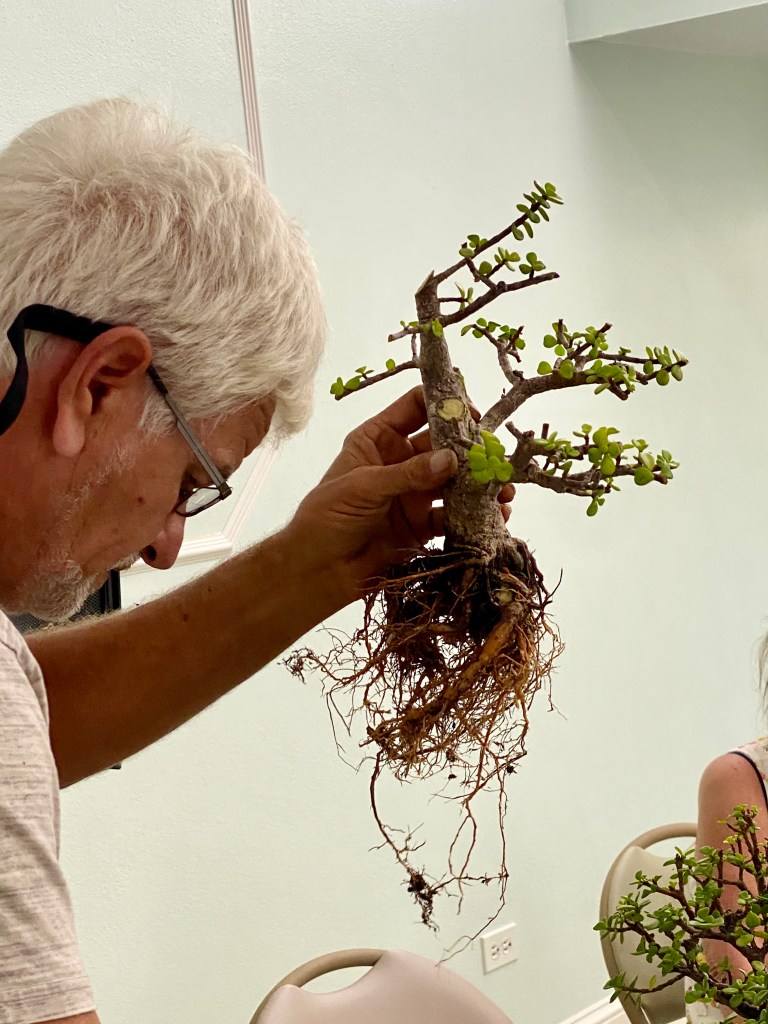
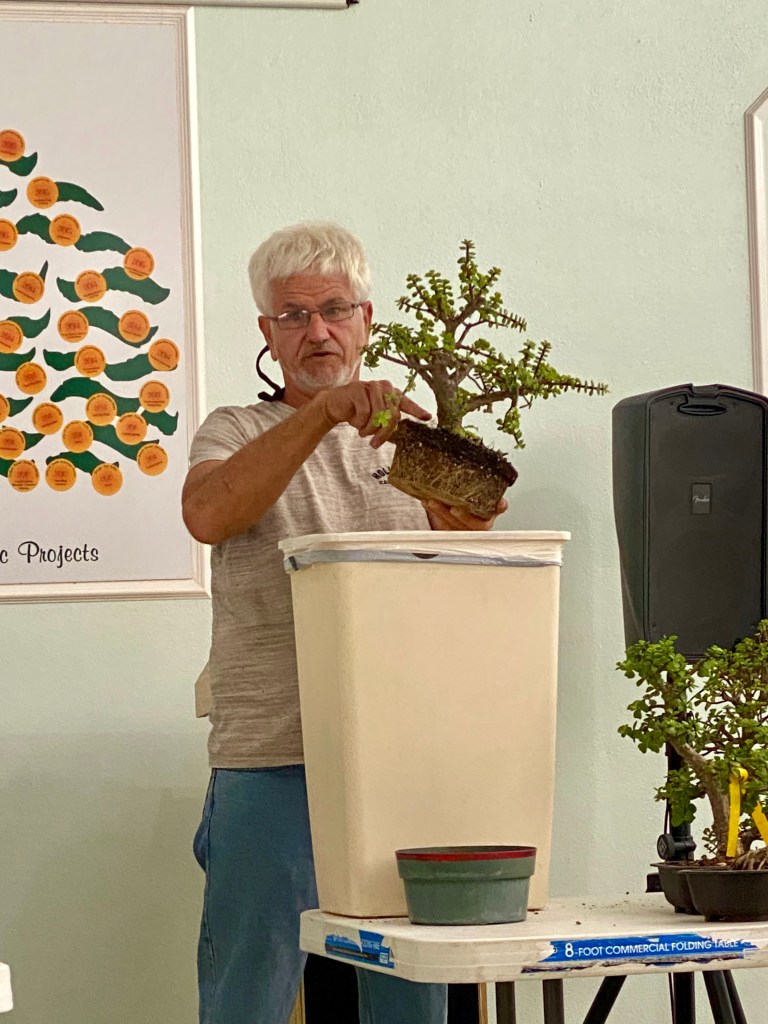
I have heard that you should cut off the top to match the bottom when transplanting trees but I had never thought about trimming the roots like that to match what I trimmed off the top. It makes perfect sense. He also showed us how to clean up the top of the roots at the base of the tree to give the base a cleaner smoother look. As he was working hard to loosen and untangle roots, he also explained you do not want roots that wrap around each other. Bonsai experts recommend repotting and trimming the roots once a year.
Lesson #5: We all need to buy Cross Stitch mesh.
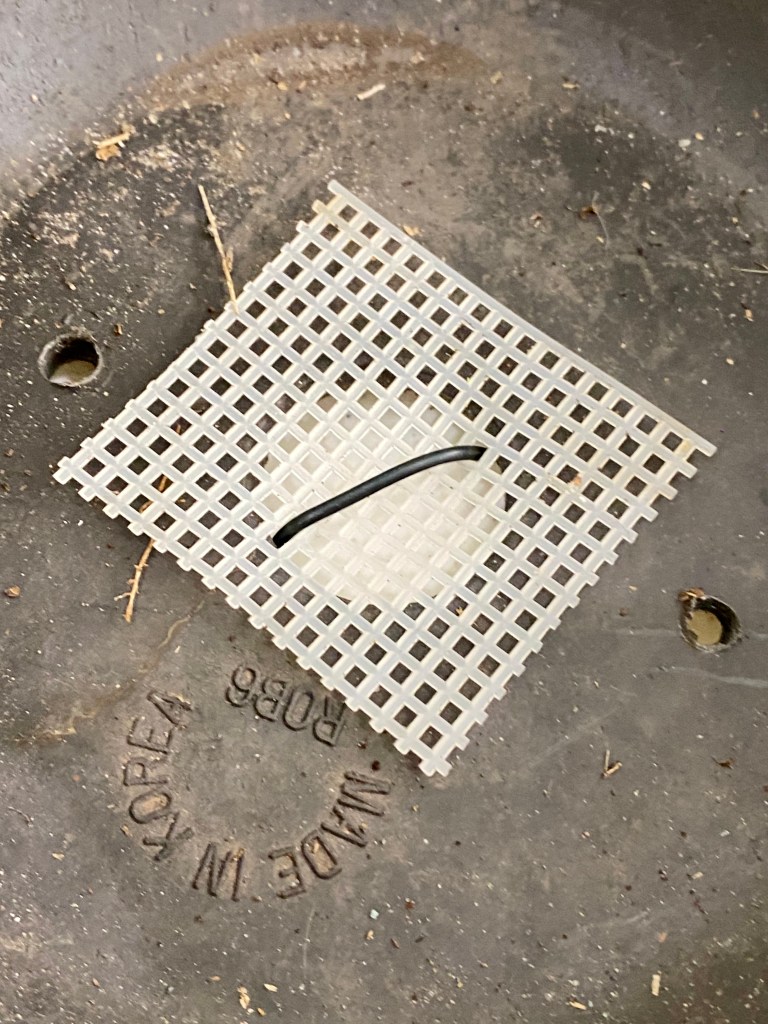
Joe shared a repotting trick that fascinated us all. He used cross stitch plastic mesh to cover the hole in the bottom of the pot. The custom Bonsai soil mix he uses is very coarse and would easily fall right through the holes. This firm plastic mesh encourages good drainage without losing the valuable soil. What a great tip!
You can get 30 pieces of pre-cut 4 inch by 4 inch plastic mesh on Amazon for $10.
Lesson #6: Bonsai soil is really soiless.
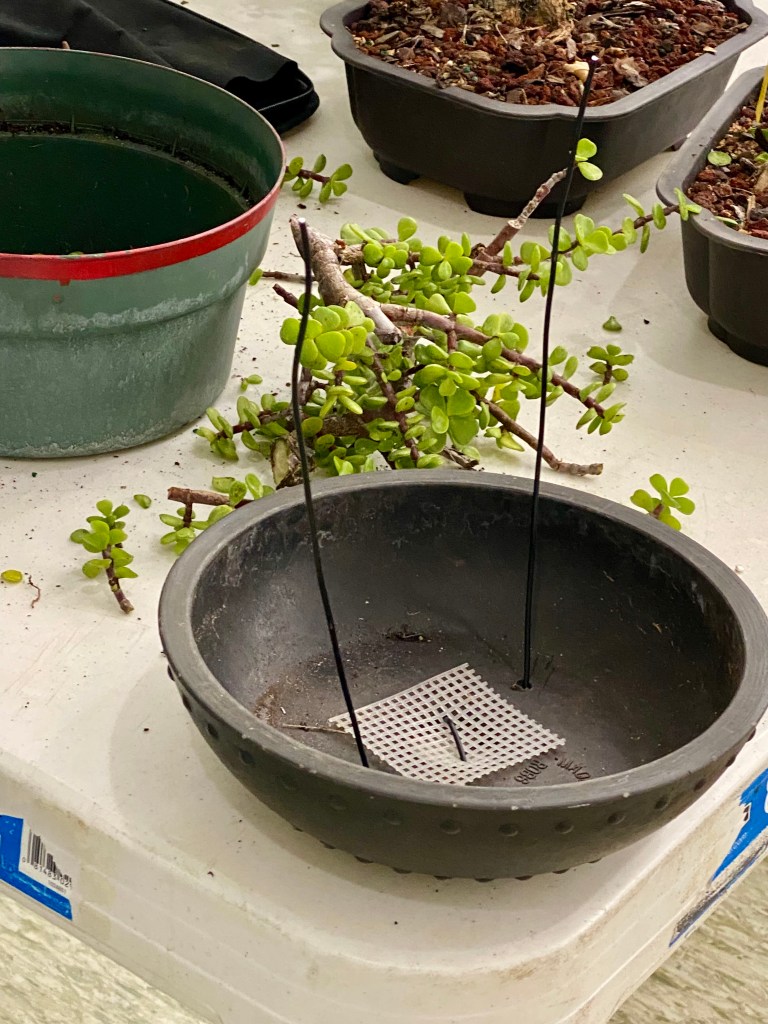
While I can’t recall all of the exact key ingredients in Joe’s soil, I am pretty sure dirt was not one of them. It seems most bonsai experts, like Joe, use a special rocky soil mixture for maximum aeration and drainage that is about 75% aggregate (minerals and rock). Hearty materials like charcoal, lava and pine bark are some common ingredients used in Bonsai “soil”.
In the picture, you can also see how he fed the wire through the holes and the mesh to secure the plant so it can establish strong roots.
Lesson #7: Chopsticks are a valuable gardening tool.
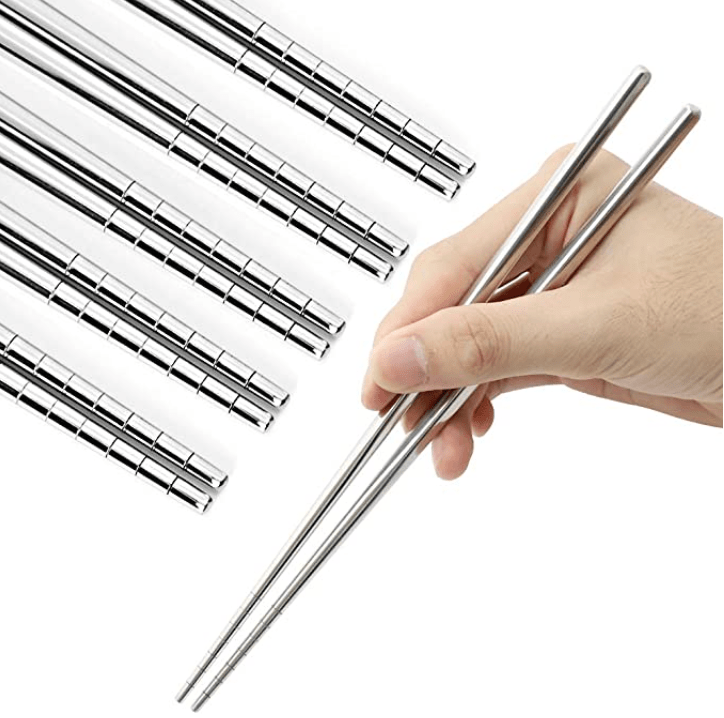
The final lesson to share is Joe’s tip to use chopsticks to help the soil settle and eliminate air space in the soil around the root of the plants. This is an important step to removing air pockets around the roots so the roots don’t dry out.
Joe also used the chopsticks to loosen the tangled roots before he trimmed them up. Brilliant!
I think I can speak for most of the ladies there, WE HAD A BLAST learning from Joe!
You can contact Joe at bambamcw@aol.com or follow him on facebook or instagram.
MORE PHOTOS
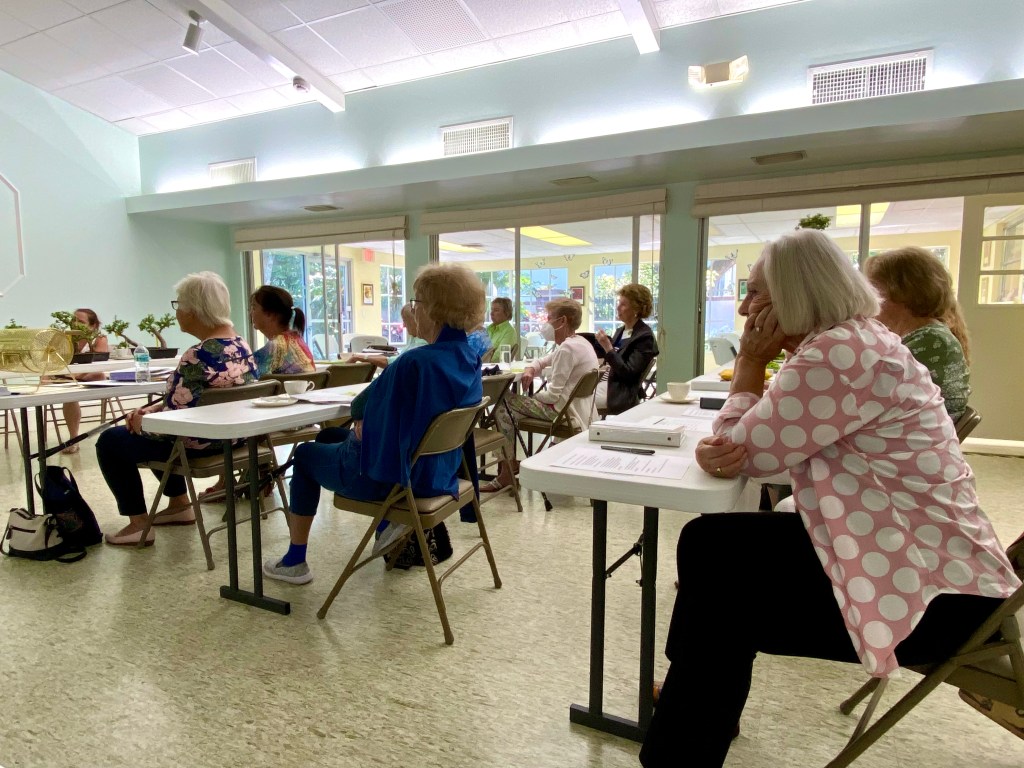
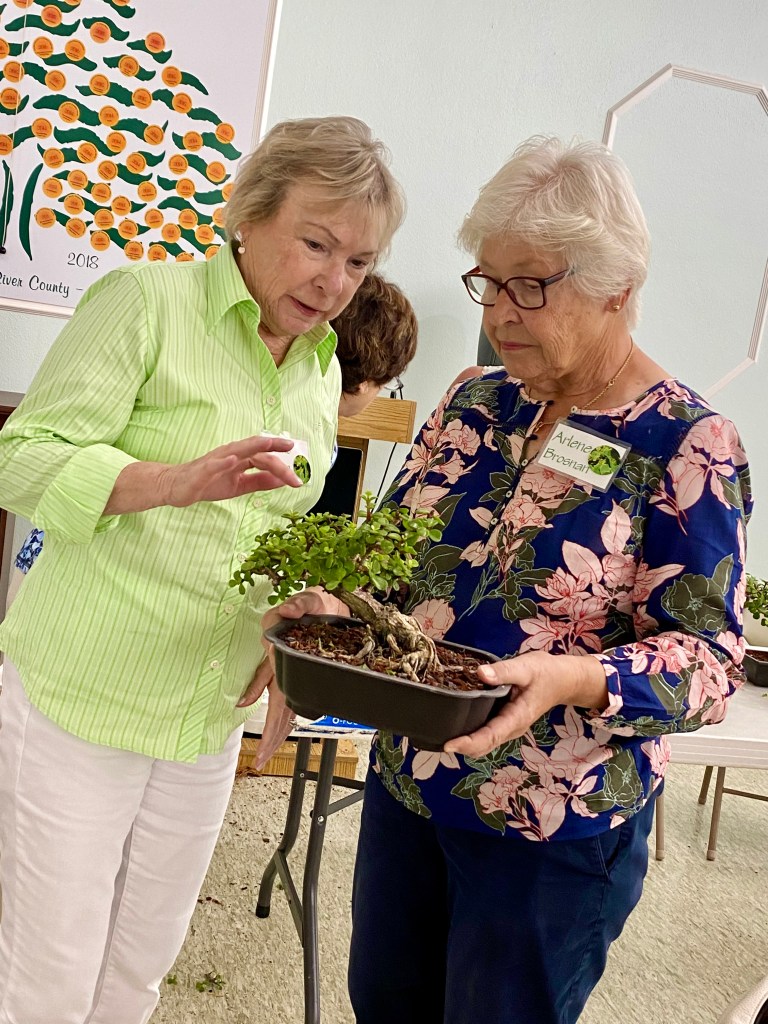
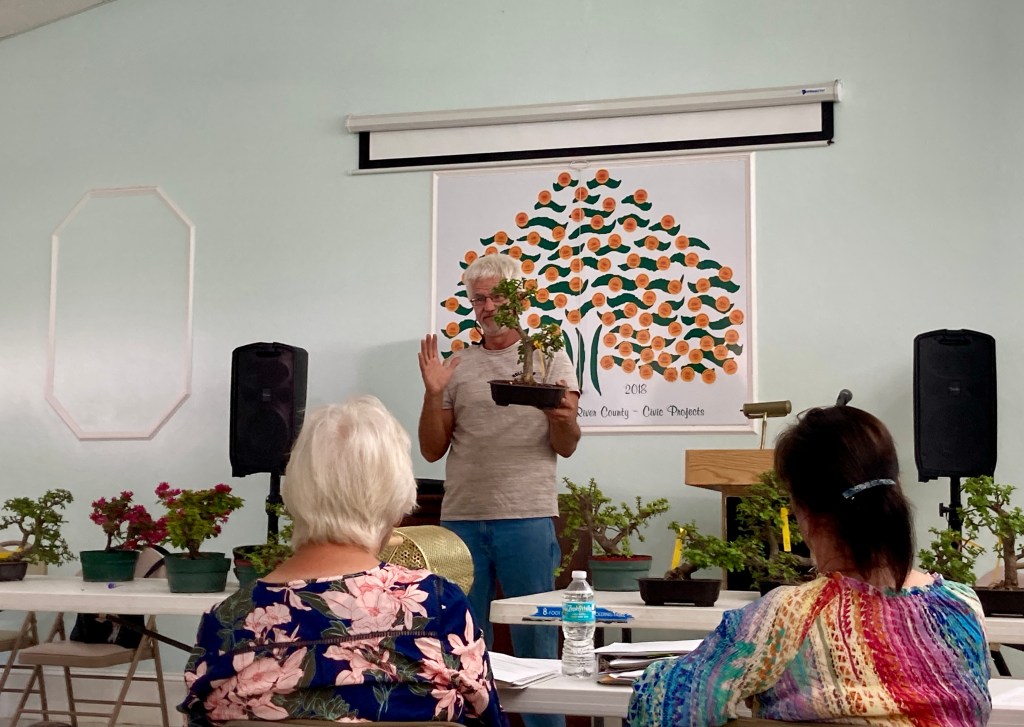
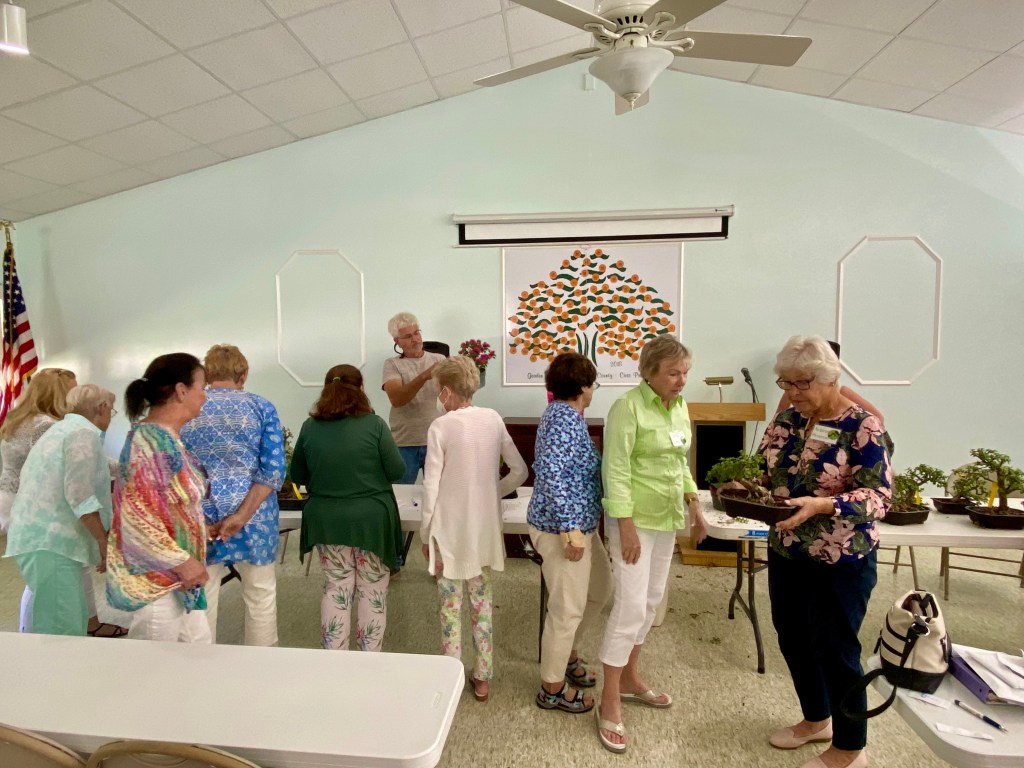
Here are some photos Sarah (one of our newest Seagrape members) and I took during our meeting.

 Seagrape Circle